
IREC Competition Team
Building Higher.
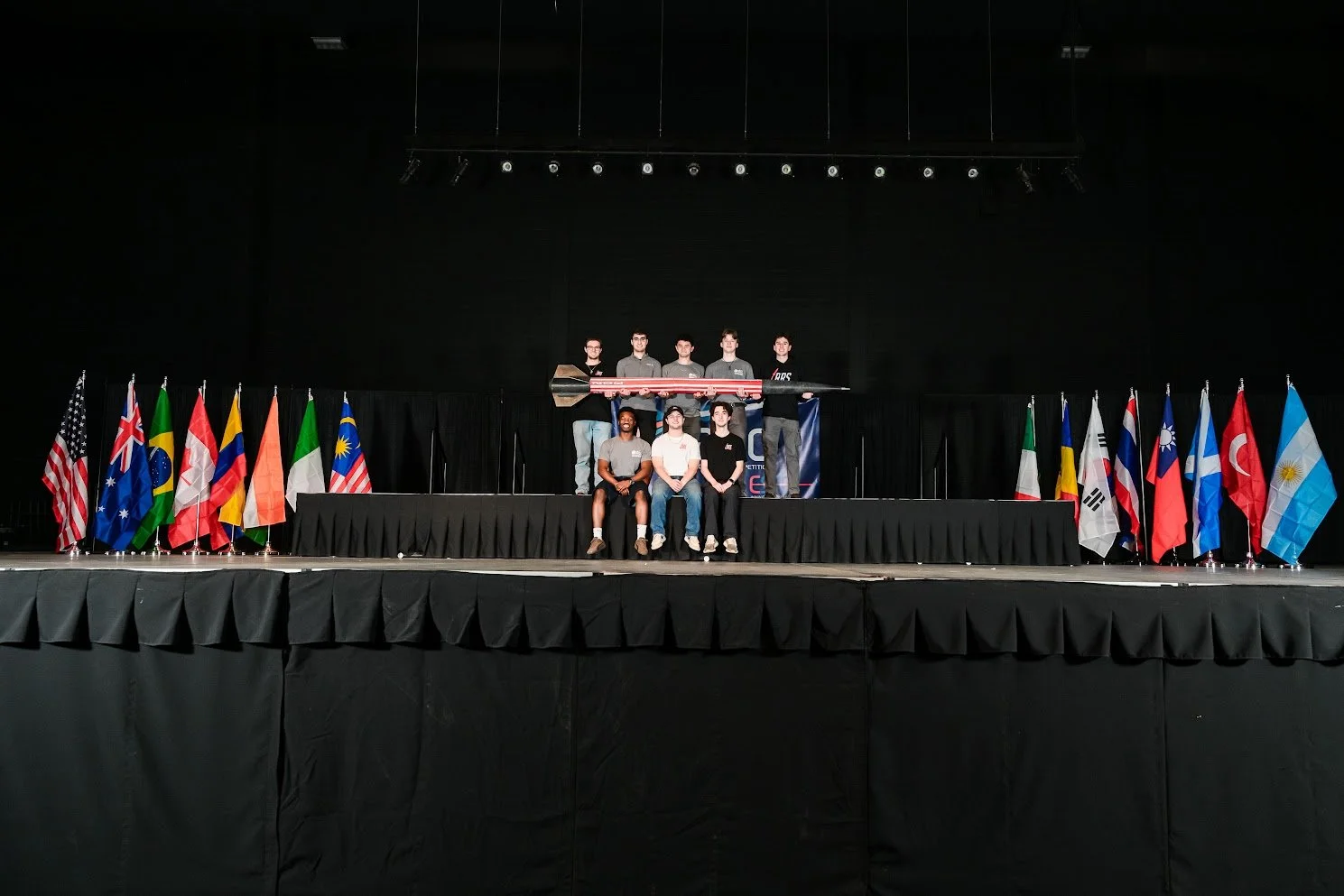
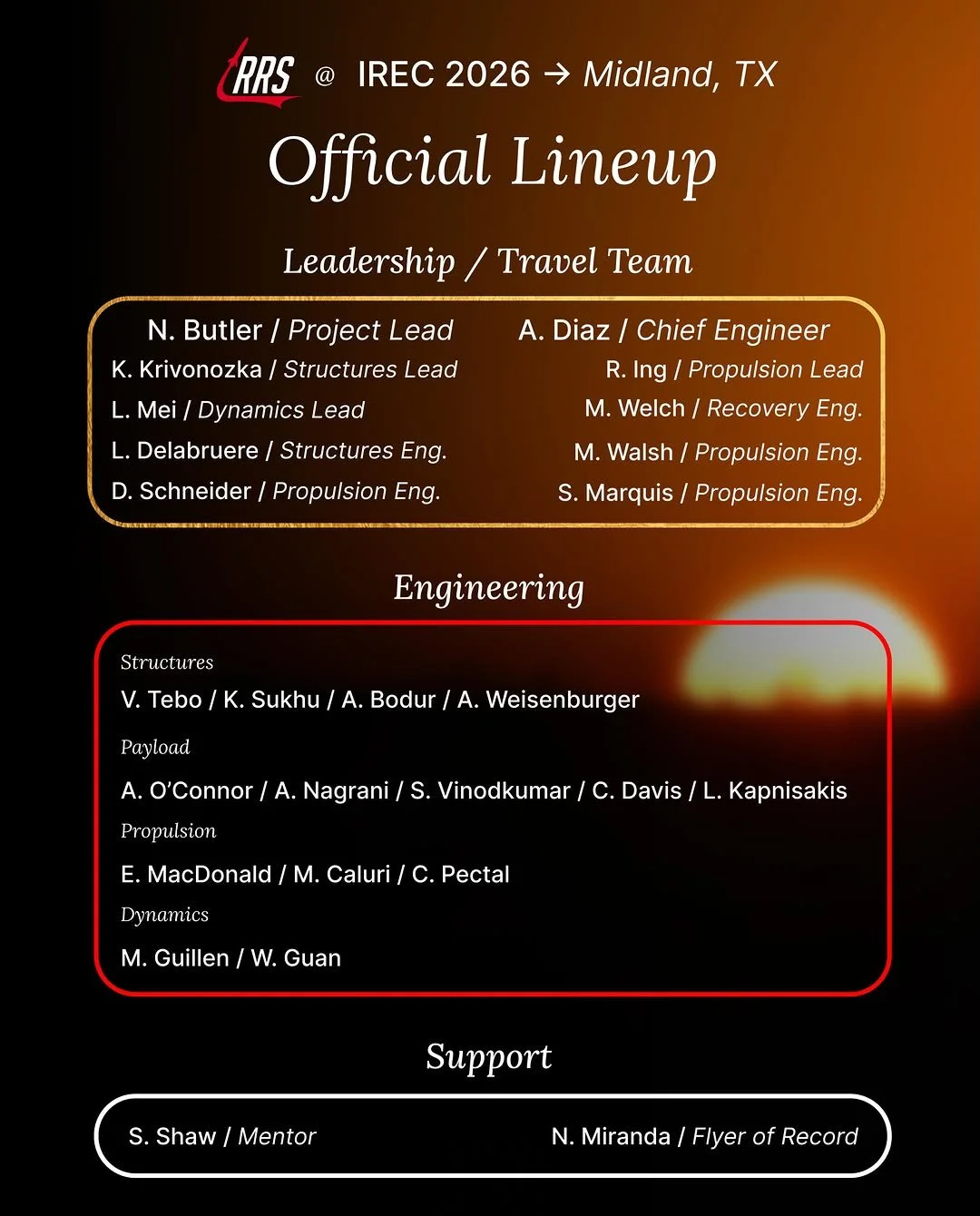
Rensselaer Rocketry Society's IREC team brings students from across RPI together to design, manufacture, test, and launch a high-power competition rocket.
30,000 ft. Student-built. One team.
What is IREC?
The Intercollegiate Rocket Engineering Competition, run but ESRA, brings university rocketry teams together to design, build, and launch high-power rockets to precise target altitudes.
Rensselaer's IREC team takes on the full engineering lifecycle. Students turn an initial concept into a flight-ready vehicle through aerodynamic analysis, structural design, simulation, manufacturing, electronics development, testing, documentation, and launch operations.
For our members, IREC is more than a competition. It's an opportunity to take engineering beyond the classroom and build something real, complex, and unforgiving of bad assumptions.
Subteams & Team Structure
STRUCTURES
Design and manufacture the rocket's airframe, fins, bulkheads, couplers, and mechanical assemblies. Structures turns loads, materials, and CAD into hardware capable of surviving launch.
RECOVERY
Make sure everything that goes up comes back safely. Recovery designs and tests the parachutes, deployment systems, separation events, and hardware responsible for bringing the vehicle home.
DYNAMICS & AIRBRAKES
Predict where the rocket will go and actively control where it ends up. The team develops flight simulations, aerodynamic models, and airbrake systems designed to improve apogee accuracy.
PROPULSION
Develop and characterize the system responsible for getting the rocket off the ground. Propulsion works with motor design, manufacturing, testing, integration, and performance analysis.
PAYLOAD
Build an experiment that turns a rocket flight into a research platform. Payload develops the mechanical, electrical, and scientific systems needed to collect meaningful data in flight.
COMMUNICATIONS
Keep the rocket connected to the ground. Communications develops telemetry, radio links, antennas, tracking systems, and ground-station infrastructure.
CONTROL SYSTEMS
Give the rocket a brain. Control Systems develops embedded software, sensors, flight computers, data acquisition, and algorithms that allow onboard systems to make decisions in real time.
Competition History
2026 - IREC
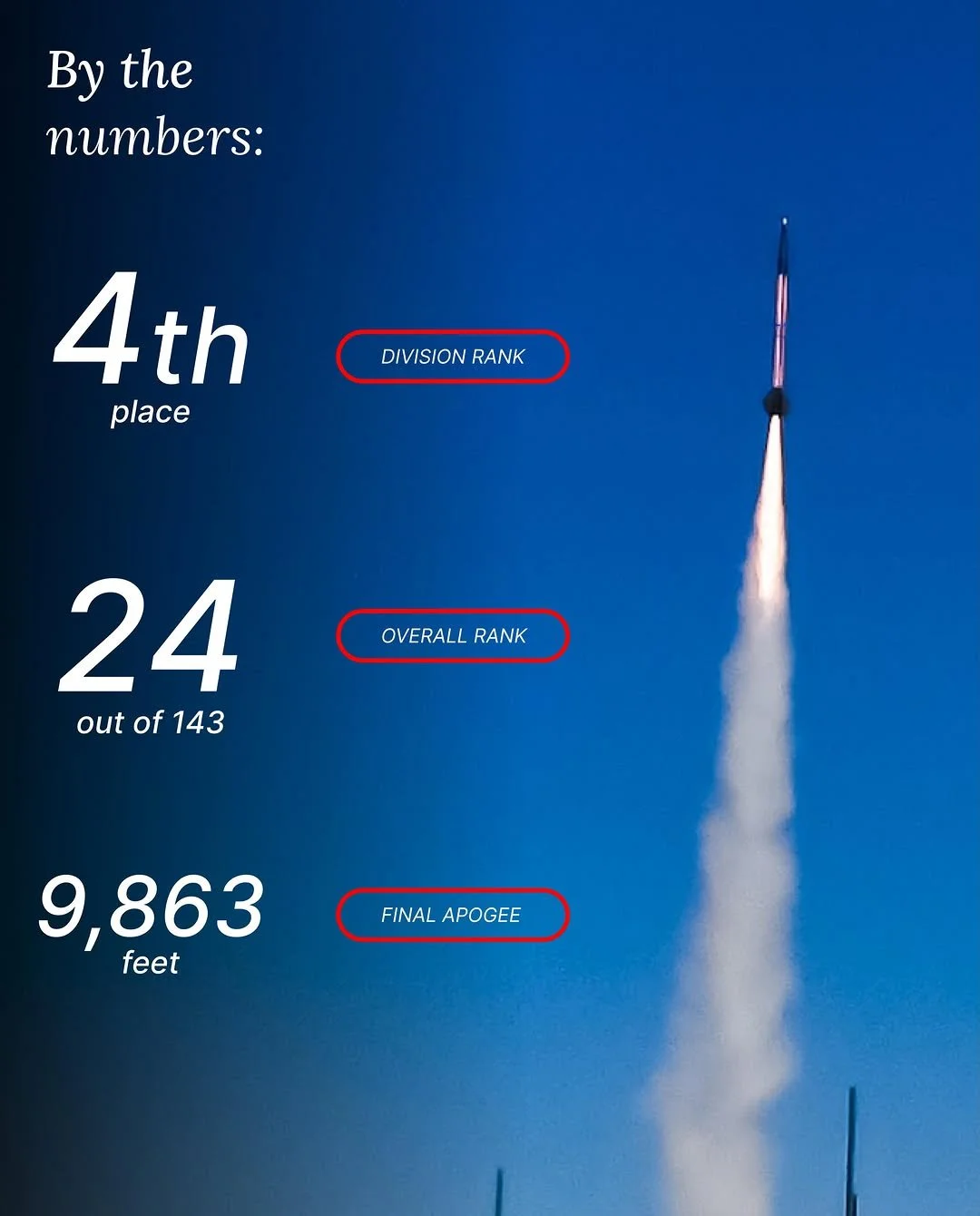
2026 | The Puck
Category: 10k Student Research and Designed
Altitude: 9,863 ft
Place: 4th 10k SRAD | 24th Overall
Help us reach the next 30,000 ft
Building competition rockets requires more than ambitious students. Our industry partners provide the materials, manufacturing capabilities, software, funding, and expertise that turn our designs into flight hardware.
By supporting RRS, partners directly invest in the next generation of engineers while building relationships with RPI students gaining hands-on experience in aerospace, software, electronics, manufacturing, and systems engineering.